Every parent knows the dread of back-to-school shopping. Uniforms, heavy backpacks, lunchboxes & notebooks are stressful enough, but nothing brings out complaints quite like buying school shoes. A child spends anywhere from seven to nine hours a day in these shoes. They stand in morning assemblies, sprint across concrete playgrounds during recess, kick footballs, and scuff their toes against classroom desks.
If you buy the wrong pair, you will hear about painful blisters within a week, or worse, you will be back at the shoe shop two months later buying a replacement.
Finding school shoes that survive daily playground chaos while keeping your child comfortable is totally doable if you know what to check.
The Afternoon Rule for Sizing
Never take your child shoe shopping early in the morning. Our feet naturally expand slightly throughout the day as we walk around, and children are no exception. An afternoon fitting gives you a much truer measurement of their actual foot size.
When measuring, resist the urge to buy a pair that is two sizes too large simply hoping they will grow into it. Oversized shoes cause friction, tripping, and painful blisters because the foot slides back and forth.
Instead, follow the classic thumb rule: leave roughly half an inch, or the width of your adult thumb, between their longest toe and the front of the shoe. That is plenty of room for natural foot growth without compromising safety.
Checking Sole Flexibility and Weight
Pick up the shoe and try to bend it. A good school shoe should bend smoothly at the ball of the foot, right where the toes naturally flex when walking. If the sole bends completely in half like a soft sponge, it lacks proper arch support. If it is stiff as a brick and will not budge at all, your child will end up walking like a robot with tired, aching calves by lunch.
Weight is just as important. Heavy, clunky shoes tire out a child’s legs during sports and morning parades.
Look for lightweight materials like high-grade PU or EVA that absorb shock on hard concrete without weighing down their feet.
Laces or Velcro: Pick by Age and Routine
The choice between traditional laces and Velcro straps usually comes down to your child’s age and morning independence. For younger children in kindergarten or primary grades, Velcro straps are an absolute lifesaver.
Kids can easily slip them on, adjust the tightness themselves, and avoid the constant hazard of untied shoelaces on the playground.
Once kids reach middle school and learn to tie secure knots, laces become the better option. Laces let children adjust the tension across the entire top of the foot, which gives better ankle stability during sports and fast running.
Breathability and Reinforced Toes
Kids sweat significantly more than adults. Trapping hot, sweaty feet in non-breathable synthetic shoes for eight hours is a direct recipe for bad odors, fungal rashes, and skin irritation. Look for school shoes with breathable linings and soft insoles that wick away sweat.
Additionally, check the front tip of the shoe. Kids constantly drag their toes on asphalt while playing or sitting.
Shoes with a reinforced toe guard or a slightly raised bumper will last twice as long as shoes with exposed, thin seams that rip after a few kicks.
Built for the Playground with Aqualite
You do not need to spend an outrageous amount of money to get tough, comfortable footwear for the school year.
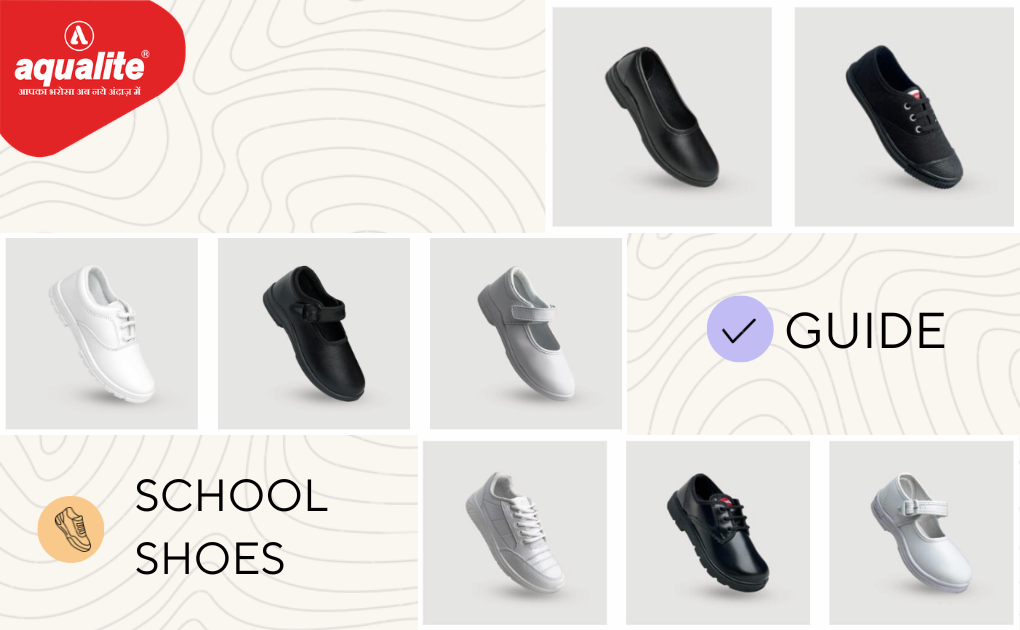
Aqualite footwear manufacturers designs its range of black formal school shoes and white PT sneakers specifically for Indian school conditions.
Featuring lightweight, shock-absorbing soles, durable upper materials, and solid traction to prevent slips in wet corridors, they provide the exact balance of comfort and playground durability parents look for.
Frequently Asked Questions
How often should I replace my child’s school shoes?
Most growing children need a new pair every six to nine months. Check the insoles and the toe box regularly. If their toes are pressing against the front or the tread on the sole is completely worn smooth, it is time for a new size.
Should I buy school shoes one size bigger?
Stick to half a size or one thumb’s width of extra space. Buying shoes that are too loose makes your child drag their feet, trips them up on stairs, and causes painful heel blisters.
Which sole material is best for active school kids?
PU (Polyurethane) soles are generally the best all-around choice. They are lightweight, flexible, and withstand heavy playground abuse on rough concrete much better than cheap plastics.
How can I stop my child’s school shoes from smelling bad?
Make sure they wear clean cotton socks every single day. Pull out the insoles to air dry overnight, and never leave damp school shoes stuffed inside a closed plastic bag or dark shoe rack.