Most of us buy shoes based purely on how they look. We check the color, feel the fabric on the top, and maybe inspect the stitching. But we rarely flip the shoe over to see what is happening underneath. The bottom of your shoe dictates your entire day. If you pick the wrong material, you will be dealing with sore arches and tired heels by lunchtime.
If you have been browsing for shoes online, you have probably seen acronyms like PU, PVC, and EVA in the product descriptions.
They sound like confusing industrial chemicals, but they are just different types of plastics and foams. Knowing how they behave on the street will completely change how you shop.
EVA: The Featherweight Champion
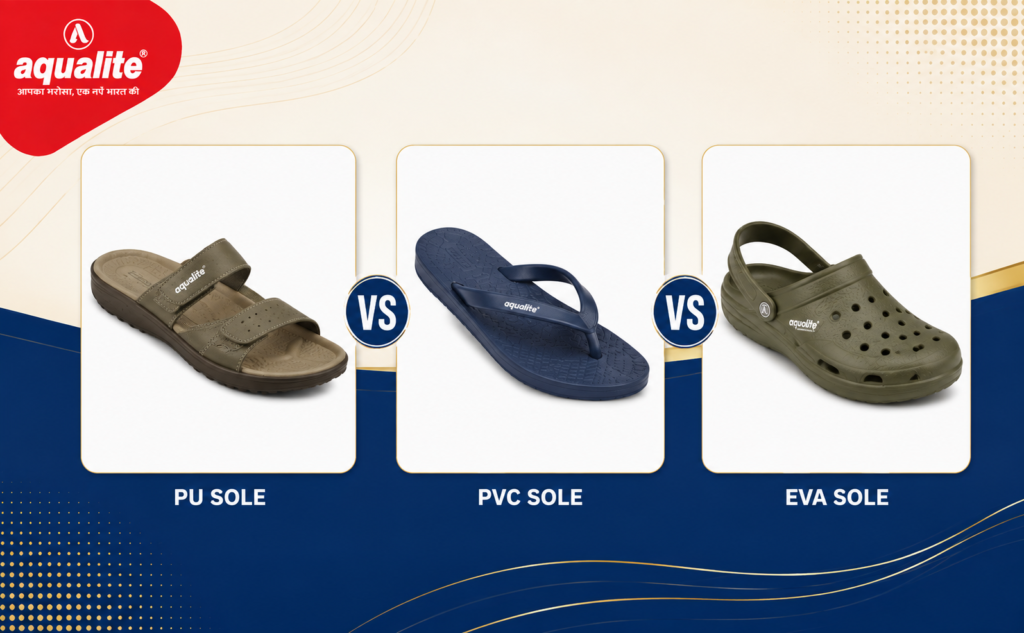
Let us start with EVA, which stands for Ethylene Vinyl Acetate. You do not need to memorize the science. Just know that it is a highly compressed foam. If you pick up a sneaker and are completely shocked by how light it is, you are holding an EVA sole.
The material is packed with millions of tiny air bubbles. When your heel strikes the pavement, those bubbles compress and absorb the shock so your knees and ankles do not have to. It is ridiculously soft and comfortable right out of the box. The only real downside is durability.
As per our EVA footwear manufacturers, because it is essentially soft foam, walking on rough concrete every single day will eventually grind the sole down. But for quick evening walks, gym sessions, or casual wear, EVA is brilliant.
Read More: EVA vs Rubber Sole Shoes: Which Is Better for Daily Wear?
PVC: The Indestructible Workhorse
PVC, or Polyvinyl Chloride, sits at the complete opposite end of the spectrum. It is a solid, dense, and heavy plastic.
If you need footwear that can take a beating and survive, PVC is the answer. It completely ignores water, resists oil, and takes a very long time to wear down. Because the manufacturing process is so cheap, shoes with PVC soles are highly affordable.
The trade-off here is comfort and flexibility. PVC is noticeably heavy and very stiff. You definitely would not want to jog in a PVC shoe. But for heavy-duty rain boots, industrial work shoes, or budget-friendly daily wear, it gets the job done without breaking the bank.
PU: The Perfect Middle Ground
PU stands for Polyurethane. If EVA is too soft and PVC is too hard, PU sits right in the sweet spot. It offers the absolute best of both worlds.
A PU sole gives you the incredible toughness of PVC, but it is significantly lighter and much more flexible. It moves naturally with your foot and grips the floor beautifully to prevent slipping. You will usually find PU soles on high-quality formal shoes, premium sandals, and serious hiking boots.
PU footwear manufacturers in India provide amazing support because the material is dense enough that it does not flatten out or compress over time. You might pay slightly more for a PU shoe, but the extended lifespan and lasting comfort make it worth every penny.
Which One Should You Actually Buy?
There is no single winner here. The right choice depends entirely on what you plan to do in those shoes. If you want weightless comfort for a casual day, go with EVA.
If you need something totally waterproof and indestructible on a tight budget, grab PVC. If you want long-lasting, supportive footwear for a long day at the office, PU is your best bet.
Aqualite, a top shoe manufacturer in India, designs footwear using all three of these materials, making it incredibly easy to find the perfect foundation for your specific daily routine.
Frequently Asked Questions
Are PU soles better than rubber?
They are very comparable, but PU is noticeably lighter than traditional solid rubber. It still gives you fantastic grip and durability, which makes a PU shoe much less tiring to wear over a long day.
Can EVA soles be used for formal shoes?
Not usually. Formal shoes need a sharp, structured appearance. EVA is soft and naturally looks very sporty. This is exactly why dress shoes rely on PU or leather soles to keep their professional shape.
Which sole is the best for standing all day?
If you have to stand in one spot for hours, PU is excellent. It provides firm, consistent support that will not flatten out under your body weight.
Do PVC soles crack in the winter?
Basic PVC can get a little stiff in freezing weather. However, the modern blends used in footwear are chemically treated to stay flexible, meaning they hold up just fine in wet and cold conditions.